.png)
Why Isn’t My Child Listening? Understanding Attention Challenges in Learning
- Bali Bridging and Development

- May 10, 2025
- 2 min read

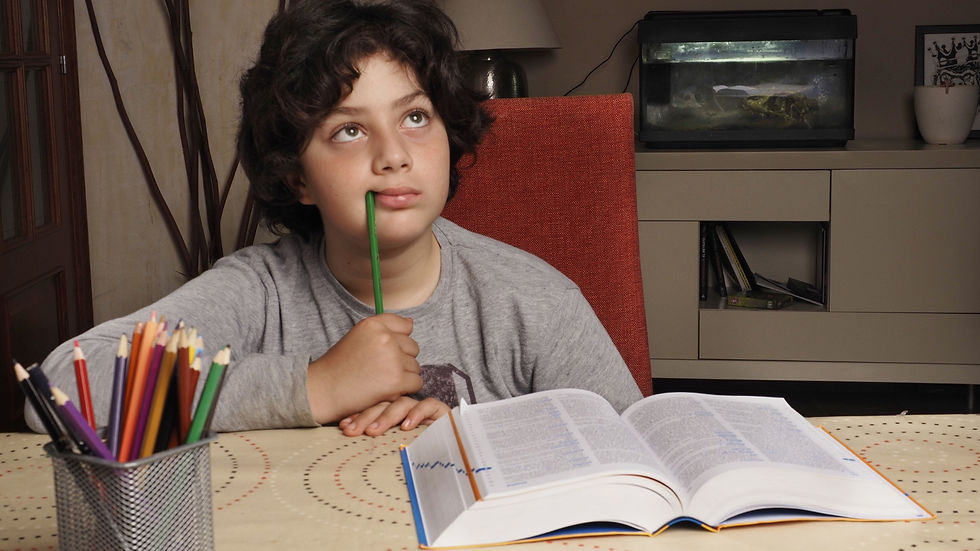
We all know the feeling - calling your child’s name five times while they stare into space or getting halfway through a sentence before they’ve wandered off. But what happens when these moments aren’t just one-offs, and start impacting your child’s ability to learn, follow instructions, or connect socially?
Attention challenges in children can be complex, and they don’t always look the same. Some kids are constantly on the move, others seem dreamy and distracted, and some are simply overwhelmed by the world around them. As a parent, it can be hard to tell whether it’s just a phase, a personality trait, or something more.
What Are Attention Difficulties?
Attention difficulties aren’t always the same as Attention Deficit Hyperactivity Disorder (ADHD), though they often overlap. Children who struggle with attention may:
Appear distracted, easily bored, or unable to stay focused on tasks
Find it hard to follow multi-step instructions
Be impulsive - blurting out, interrupting, or acting without thinking
Seem restless, fidgety, or always ‘on the go’
Daydream or appear ‘checked out’ during lessons
Struggle to manage time or switch between activities
For some children, these behaviours happen occasionally. For others, they’re a consistent pattern that starts to affect their learning, self-esteem, or relationships with teachers and peers.
What Could Be Behind It?
There are many possible reasons for attention challenges, including:
Neurodevelopmental differences, such as ADHD or Autism Spectrum Disorder
Sensory processing difficulties, where the brain has trouble managing incoming information
Language or auditory processing issues, making it hard to understand instructions
Emotional or social stressors, like anxiety, trauma, or big changes at home
Learning differences, like dyslexia or slower information processing speed
Understanding the cause matters—because it changes what kind of support will help.
“It’s not always about ‘bad behaviour’ or lack of effort,” says child psychologist Dr. Amanda Abel of the Centre for Child Development. “If a child is struggling to focus, it could be their brain working extra hard to cope with the demands around them.”
What Parents Can Do
If you’re concerned about your child’s attention, here are a few first steps:
Track patterns. When do you notice the struggles most - at school, after lunch, during transitions? Keeping a log can help spot triggers.
Speak with your child’s teacher. Ask what they’re seeing in the classroom and whether it’s affecting learning or behaviour.
Rule out basic factors. Sleep, nutrition, and screen time can all influence focus.
Get support from professionals. Start with a personal consultation from a child development expert who can help assess and guide your next steps.
At Bali Bridging and Development, we offer individualised courses designed around your child’s specific attention challenges - whether or not there’s a diagnosis. These courses aren’t about ‘fixing’ your child. They’re about helping them feel understood, confident, and equipped with the tools they need to succeed.
Curious About What’s Going On? Let’s Talk.
If you’ve been wondering whether your child’s attention difficulties are something more, you don’t have to navigate it alone. Reach out for a personal consultation and let’s explore what kind of support might make a difference.


Comments